

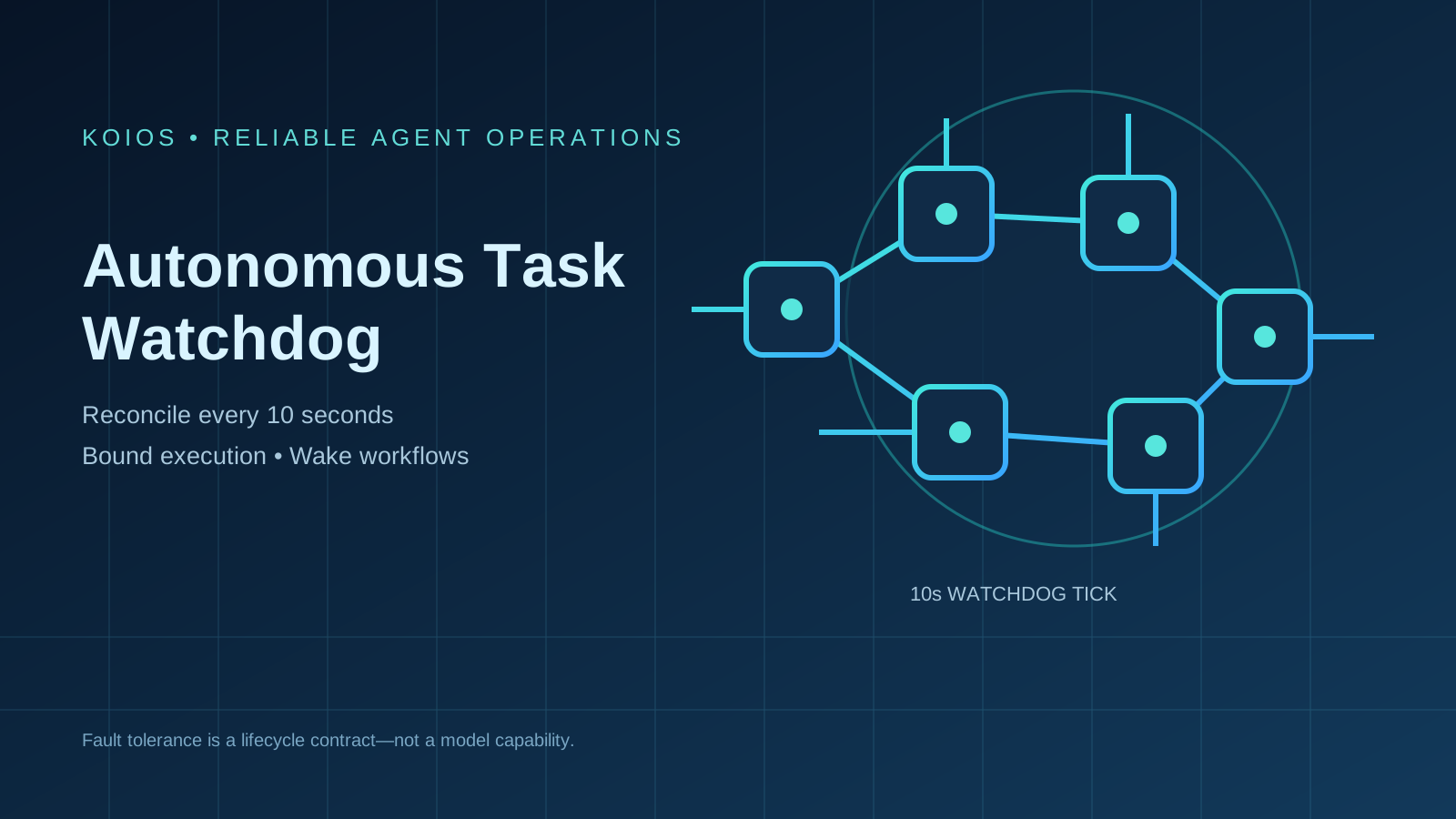
A stalled agent task can quietly consume capacity and block an entire workflow. Learn how periodic reconciliation, bounded execution, and parent wakeups make failures explicit and recoverable.
The Workspace CLI: A Predictable Command Surface for AI Agents
A predictable agent interface starts with discoverable commands and explicit schemas. Learn how the Koios Workspace CLI helps engineering teams turn model intent into bounded, verifiable operations.
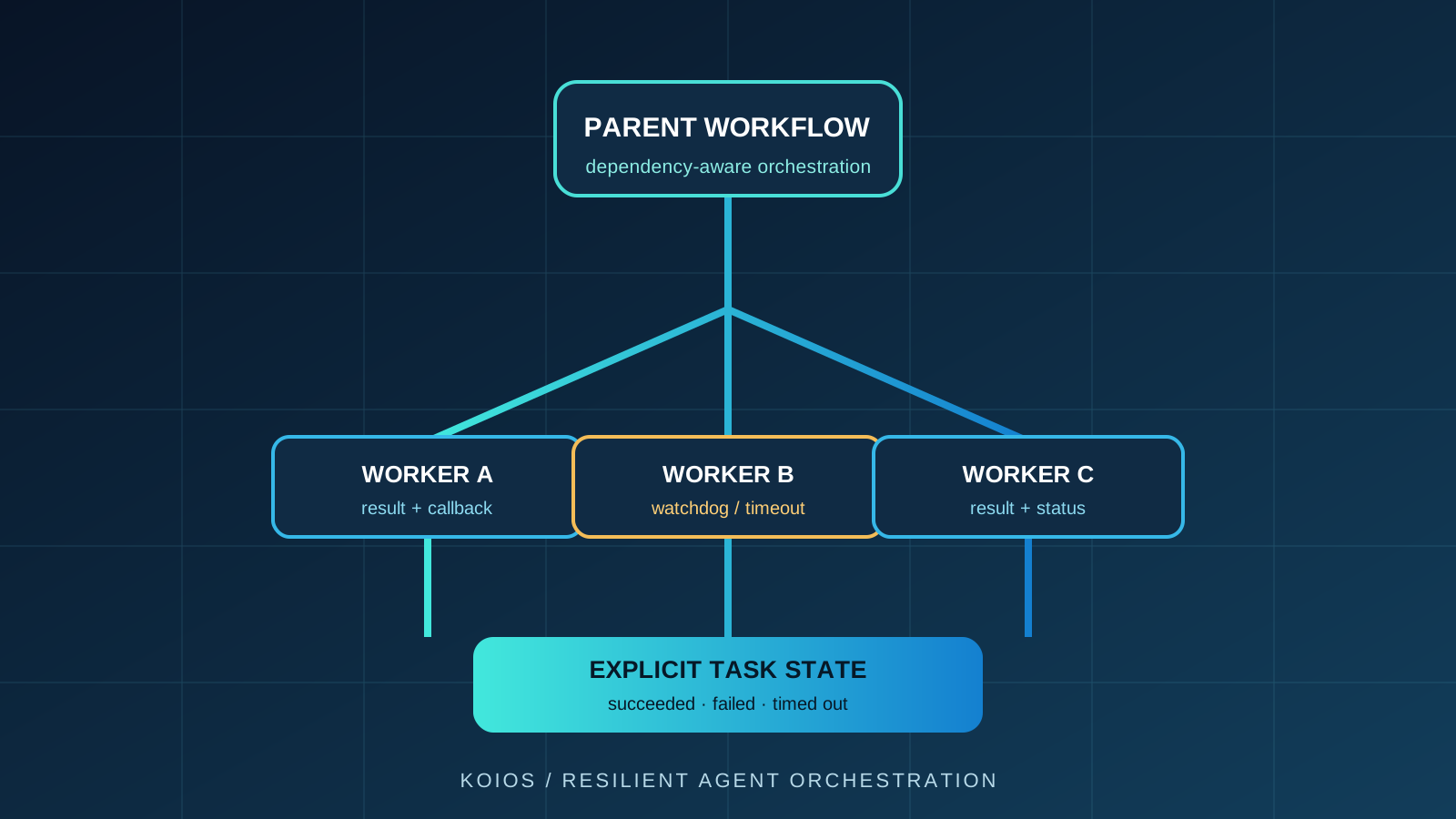
The Anti-Freeze Callback Protocol: Preventing Orphaned AI Agents
When a worker agent goes silent, dependencies can leave an entire workflow waiting. Explore callback, watchdog, retry, and validation patterns that make agent execution observable and recoverable.
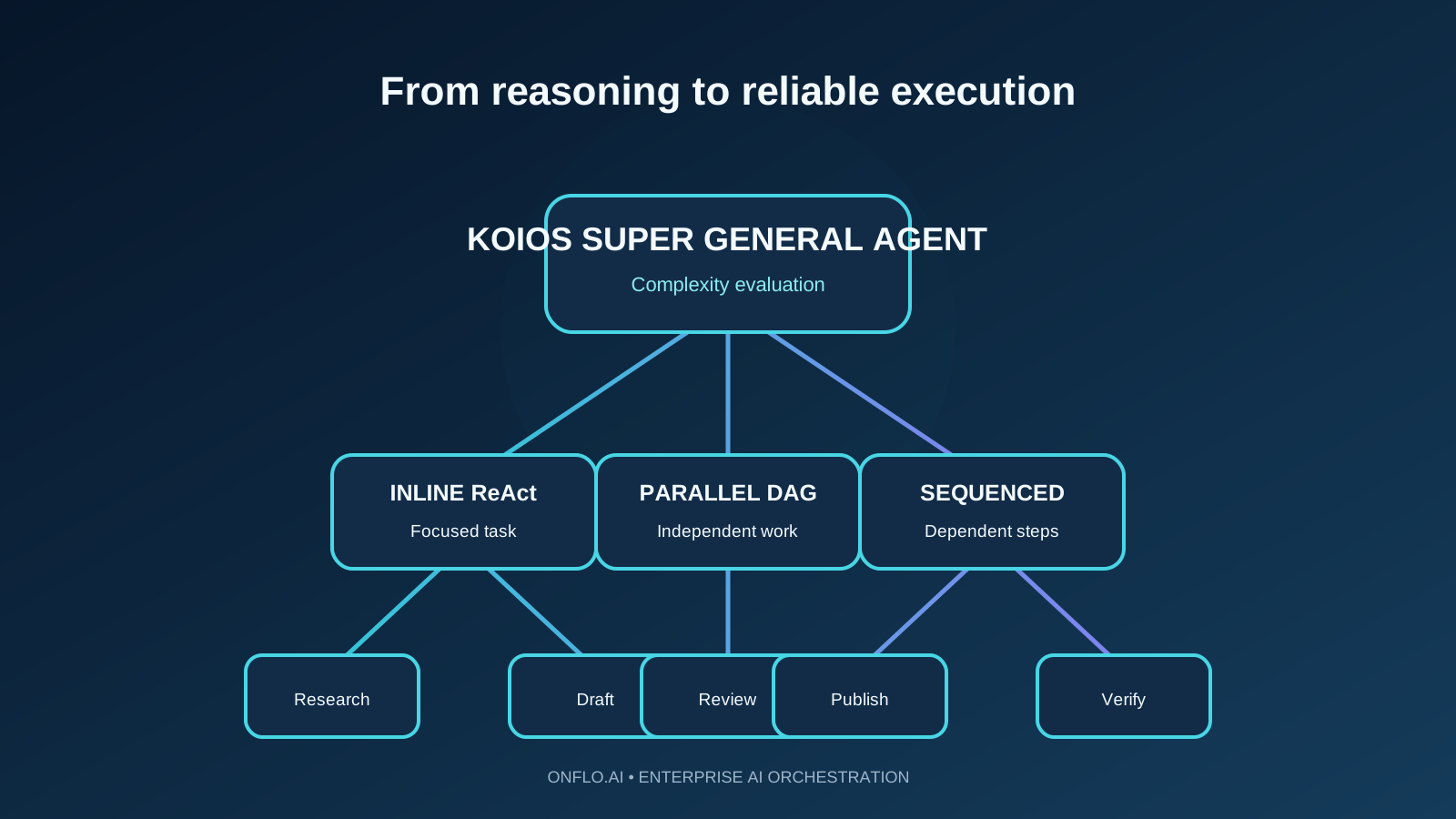
Inside the Koios Super General Agent: Complexity Evaluation and DAG Execution
Learn how Koios chooses between direct ReAct execution and dependency-aware task DAGs. Discover a practical framework for parallelism, sequencing, and reliable completion.

ReBAC-Governed Client Portals: Safely Expose AI to Enterprise Clients
A client-facing AI portal should expose approved workflows without opening the internal control plane. Learn how feature gates, ReBAC, and scoped resources can preserve tenant boundaries.
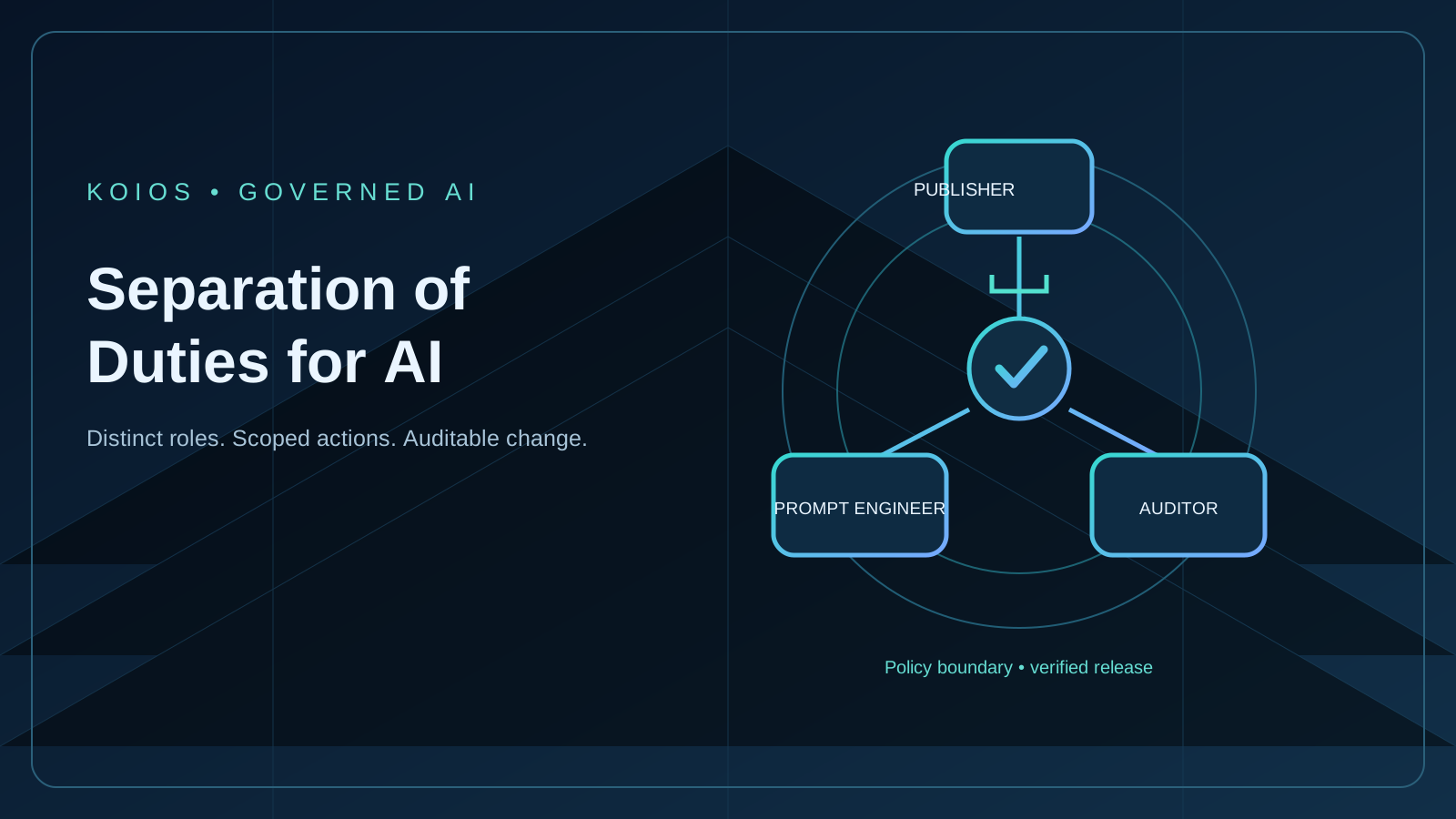
Separation of Duties in AI Engineering: Prompt Governance, Auditing, and Knowledge Ownership
Separate AI prompt editing, auditing, knowledge management, and production publishing with scoped capabilities and reviewable change controls for safer enterprise releases.
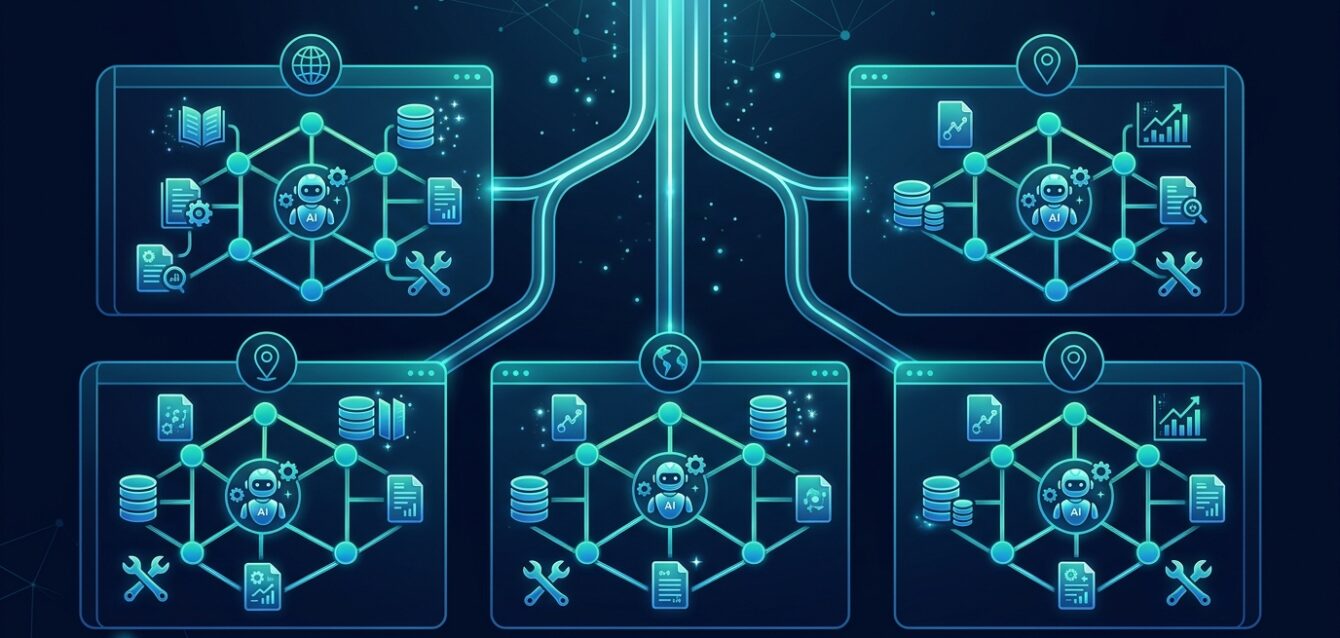
Granular AI Resource Scoping: Isolate Agents, Knowledge Bases, and Files Across Org Trees
Learn how AI resource scoping separates agents, knowledge bases, files, and tools across organizational trees with explicit ReBAC authorization.
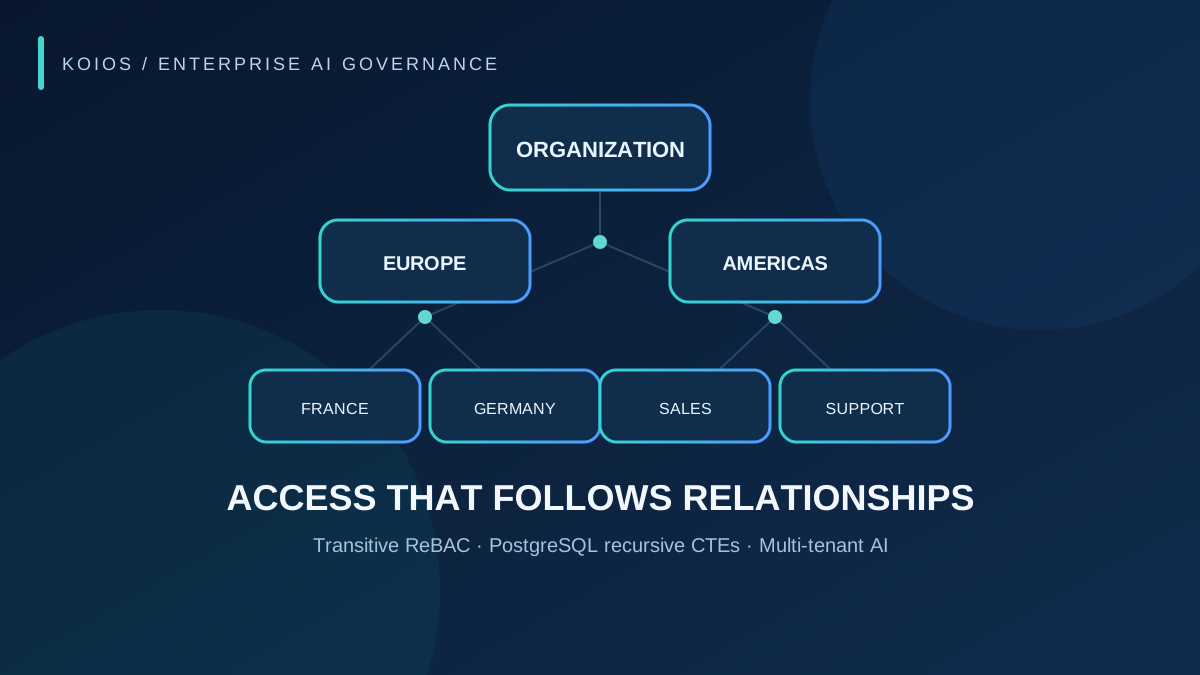
Beyond Flat RBAC: How Transitive ReBAC and PostgreSQL Recursive CTEs Solve AI Multi-Tenancy
Flat roles can struggle to express enterprise boundaries across regions, departments, and AI resources. Learn how Transitive ReBAC and PostgreSQL recursive CTEs help model inherited scope—with explicit tenant checks and deny-by-default controls.
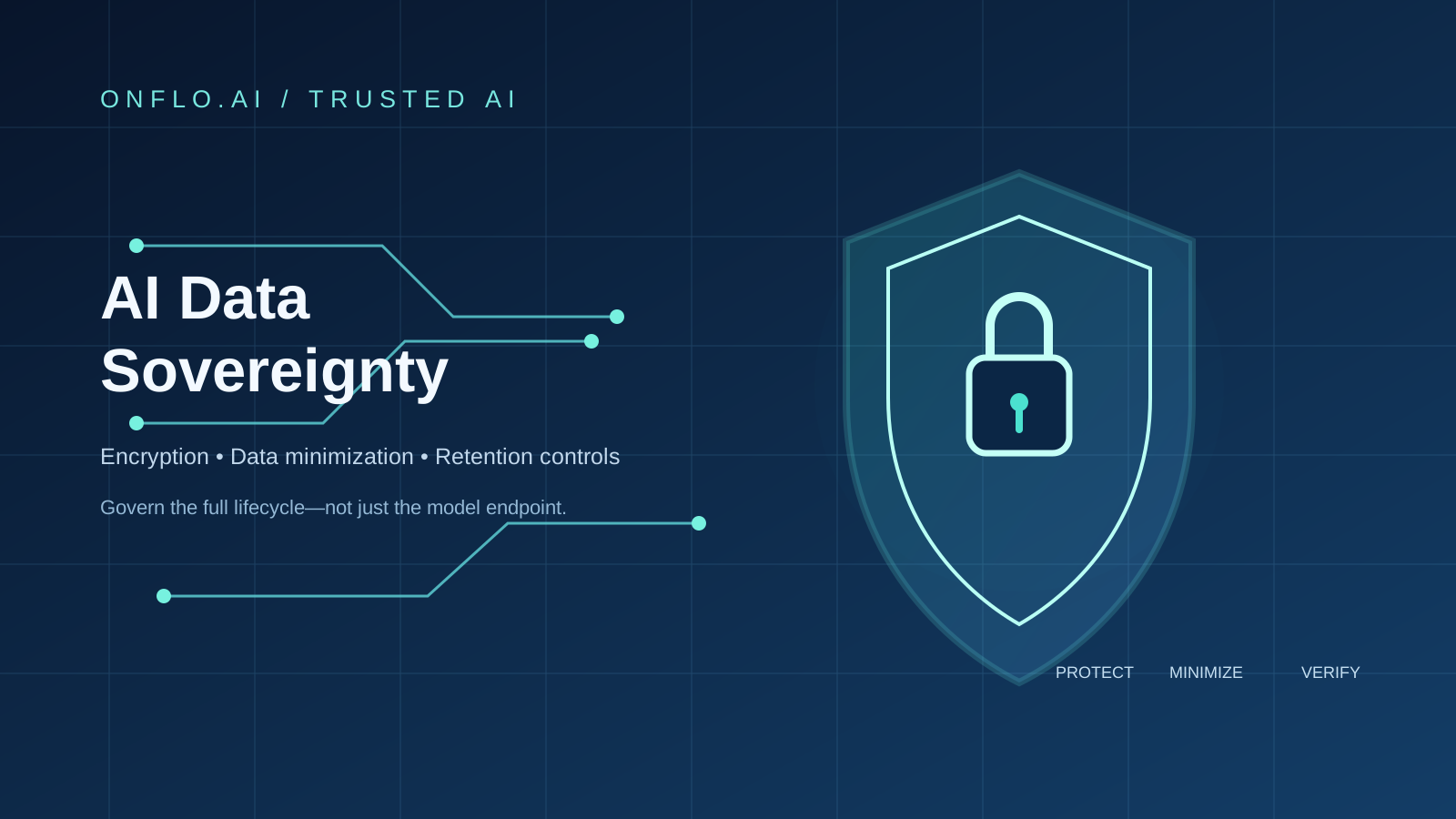
AI Data Sovereignty: Encryption, PII & Zero Retention
AI data sovereignty depends on controlling the full data path: minimize and redact before inference, encrypt sensitive stores, define retention boundaries and verify vendor claims with evidence.
Enterprise SSO for AI Platforms: SAML, OIDC & SCIM
Enterprise SSO for AI platforms goes beyond login. Learn how SAML 2.0, OIDC, SCIM provisioning, and application-level authorization work together to govern enterprise AI access.