Enterprise SSO for AI Platforms: SAML, OIDC, and SCIM Without the Identity Sprawl
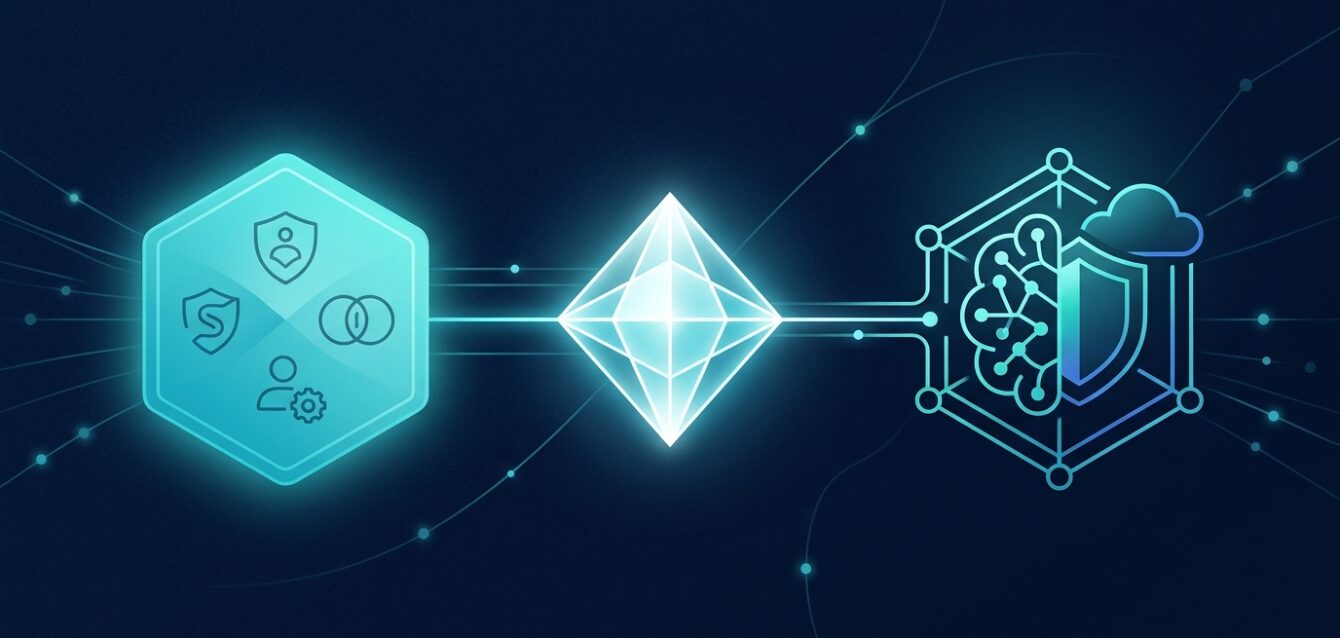
Enterprise SSO for AI platforms is not a login-page checkbox. It is the control plane that connects a company’s identity lifecycle to systems where agents can access knowledge, invoke tools, and act on behalf of people. When identity lives in one directory but AI access is provisioned elsewhere, the gap creates operational drag and an avoidable security risk.
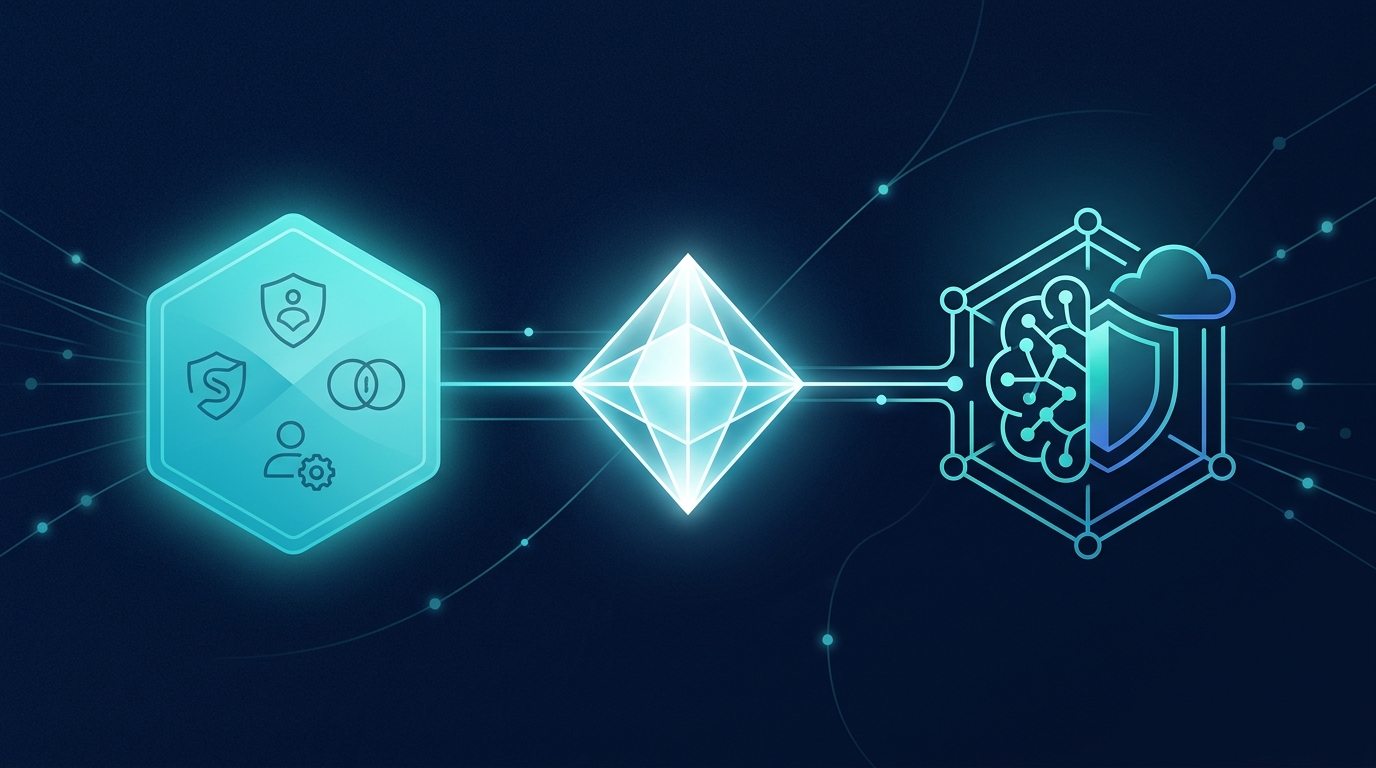
This guide explains how to think about SAML 2.0, OpenID Connect (OIDC), and SCIM provisioning as complementary parts of an enterprise AI identity architecture—and the questions IAM and security teams should resolve before rollout.
Why AI deployments expose identity gaps
AI products introduce more than another application account. A user may access a conversational surface, agents, connectors, knowledge bases, and workspaces, each with different data scope and actions. A local password or manually maintained account can drift from the authoritative workforce directory. An employee changes teams, leaves the company, or loses a privileged role; disconnected AI entitlements may persist after the business event.
Three concerns are often conflated:
- Authentication: Who is signing in, and did the identity provider validate them?
- Provisioning: Which user and group records should exist in the service, and how are changes communicated?
- Authorization: What may this identity see or do, in which organization or resource scope?
SSO addresses the first problem, SCIM can automate lifecycle synchronization, and application authorization policies govern the third. A successful federation response should never be treated as blanket permission to use every AI tool or retrieve every knowledge source.
SAML 2.0 and OIDC: choose a protocol, not a security shortcut
SAML 2.0 is a mature, XML-based federation protocol commonly used for browser-based enterprise single sign-on. OIDC layers an identity protocol on OAuth 2.0 and uses signed tokens to convey authentication claims. Both can let an organization rely on its identity provider (IdP) for authentication rather than asking a SaaS application to become a second password authority.
| Consideration | SAML 2.0 | OIDC |
|---|---|---|
| Common fit | Established enterprise browser federation | Modern web and API-oriented identity flows |
| Typical artifacts | Signed XML assertions and metadata | ID tokens, claims, issuer and client configuration |
| Operational focus | Entity IDs, ACS URL, signing certificates, assertion conditions | Issuer, redirect URI, audience, nonce/state, token validation |
| Decision principle | Use where supported by the IdP and service estate | Use where supported and aligned with application architecture |
There is no universal winner. Confirm the target application, IdP capabilities, user experience, signing-key rotation process, and support for the required claims. Do not select based only on protocol familiarity.
A secure federation flow, step by step
- Register a relying application. Establish the service’s identifiers and exact callback or assertion-consumer endpoints in the IdP configuration.
- Validate the trust material. Verify issuer, audience, signature, certificate or key, token lifetime, and destination/redirect details. Treat metadata and keys as security-sensitive configuration with an owner and rotation procedure.
- Map claims deliberately. Define stable identifiers and map only required attributes. Avoid relying on display names or mutable email addresses as durable identity keys where a stable subject identifier is available.
- Establish an authenticated session. Apply session expiration, renewal, and logout behavior intentionally; test clock skew and expired or malformed assertions/tokens.
- Authorize each action separately. Authentication proves an identity under configured trust. The application still evaluates role, organization, resource scope, and requested action before agent execution or retrieval.
For OIDC, the service must validate the token’s signature and expected issuer, audience, expiry, and relevant flow protections. For SAML, it must validate the signed assertion, issuer, audience, recipient/destination, and validity window. In both cases, failure should be closed: an invalid or ambiguous identity response must not create a privileged session.
SCIM: automate the identity lifecycle
Single sign-on answers “can this person authenticate now?” It does not necessarily create, update, suspend, or remove that person’s account and group memberships in the application. System for Cross-domain Identity Management (SCIM) is designed to standardize user and group provisioning between identity systems and services.
A disciplined SCIM rollout defines:
- Authoritative source: Which directory owns each identity attribute and group membership?
- Joiner, mover, leaver behavior: What happens on hire, team change, leave of absence, termination, and rehire?
- Deprovisioning semantics: Is an account suspended, deactivated, or deleted, and what happens to its audit history and owned resources?
- Group mapping: Which groups map to application roles, and who approves changes to those mappings?
- Reconciliation: How are failed pushes, duplicate records, and out-of-order updates detected and repaired?
SCIM is a synchronization mechanism, not a substitute for authorization review. A group membership should map to the minimum useful application role and scope. Changes to high-impact mappings should be audited and tested in a non-production environment.
Beyond SSO: authorization for agents and organizational data
An AI platform’s identity design should extend from sign-in into every governed operation. A federated user may be permitted to open an agent but not publish its prompt, change connector credentials, or search a restricted knowledge base. A user can also belong to a department whose access differs from another team in the same tenant.
Koios messaging describes support for SAML 2.0 and OIDC federation, with SCIM automated provisioning, alongside transitive relationship-based access controls and resource scoping. Together, these concepts separate identity proof from the later decision about access to an agent, tool, workspace file, or knowledge base. The exact deployment configuration and supported mappings should be confirmed with the product and identity teams for the target environment.
| Layer | Question | Example control |
|---|---|---|
| Identity provider | Who is the user? | Federated SAML/OIDC authentication, MFA policy |
| Provisioning | Should the account and group state exist? | SCIM create, update, suspend; reconciliation |
| Application role | Which functions may the user perform? | Read, configure, publish, administer |
| Resource scope | Which tenant, department, agent, or dataset? | Organization-aware resource access checks |
| Audit | Can the organization reconstruct access changes? | Record actor, change, target, timestamp, outcome |
Implementation checklist for IAM and security teams
- Assign an owner for IdP registration, certificates or keys, metadata, and rotation.
- Document stable identifier and claim mappings; minimize attributes sent to the service.
- Test valid login, invalid signature, wrong audience, expired assertion/token, disabled account, and IdP outage scenarios.
- Verify MFA and conditional-access enforcement at the IdP; do not assume the application re-implements it.
- Test onboarding, group change, suspension, termination, and rehire end to end if SCIM is in scope.
- Review group-to-role mappings for least privilege and ensure group changes do not silently widen data access.
- Exercise session revocation and the maximum time for access removal to take effect.
- Confirm separate controls for agent execution, tool invocation, knowledge search, prompt editing, and production publishing.
- Log administrative changes and authentication/provisioning failures without storing unnecessary sensitive assertion or token contents.
- Use staged rollout with a small pilot group, rollback plan, and periodic access recertification.
Common failure modes to avoid
- SSO equals authorization: A signed-in employee should not automatically inherit broad agent or data access.
- Claims without ownership: Attribute changes break access silently when nobody owns the mapping.
- Provisioning without deprovisioning tests: Creating users is easy; proving timely access removal matters just as much.
- Overloaded groups: Reusing broad directory groups for fine-grained AI permissions can grant unintended capability.
- Unplanned key rotation: Trust metadata expires or signing keys change; monitor expiry and rehearse rollover.
- Silent fallback: If federation is unavailable or validation fails, a weaker local login path can undermine the intended policy unless explicitly governed.
Conclusion: make identity a lifecycle, not a login button
Enterprise SSO for AI platforms works best when federation, provisioning, authorization, and audit are designed as separate but connected controls. SAML 2.0 or OIDC can anchor authentication in the organization’s IdP. SCIM can reduce manual account drift. Application-level role and resource checks determine what a verified user may actually do.
For AI deployments, that separation is essential: agents and retrieval systems can amplify the reach of a user’s permissions. Connect enterprise identity to narrowly scoped, reviewable access—and test the full lifecycle, especially changes and offboarding—before scaling beyond a pilot.
For a related security perspective, read our enterprise AI security gateway guide. For protocol guidance, consult the OpenID Connect Core specification, RFC 7644 (SCIM protocol), and the NIST Digital Identity Guidelines.
Learn how Koios approaches governed enterprise AI through its Enterprise AI Harness and Transitive ReBAC model.